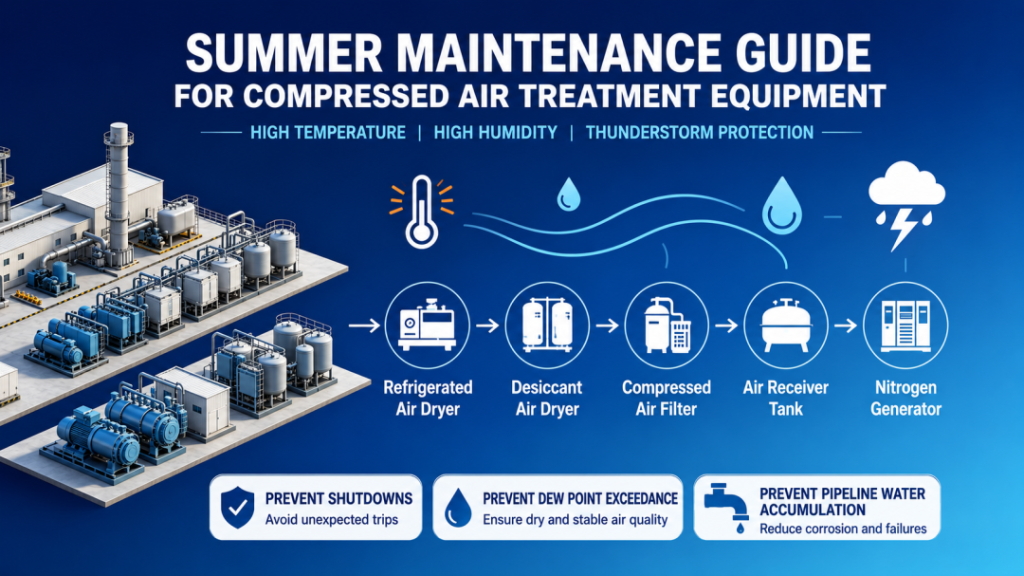

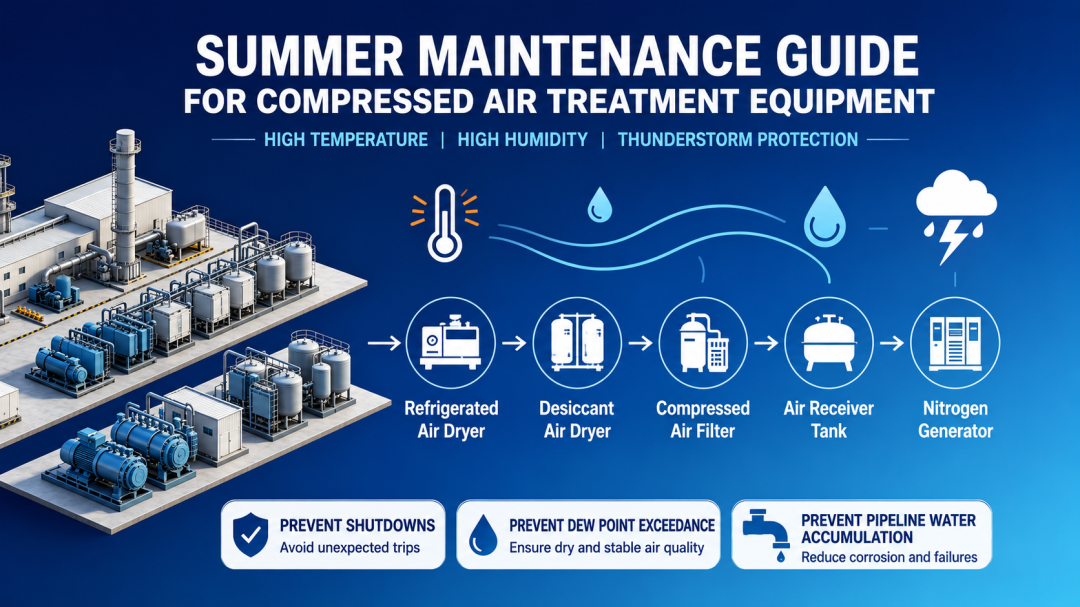
Summer's high temperatures, high humidity, and frequent thunderstorms place greater demands on compressed air after-treatment equipment. Common issues such as unexpected shutdowns, high pressure dew point, unstable nitrogen purity, and pipeline corrosion caused by condensate can disrupt production and reduce system reliability. This guide highlights the most common summer maintenance concerns for refrigerated air dryers, desiccant air dryers, compressed air filters, air tanks, and nitrogen generators, providing practical tips to keep your system operating at peak performance.
Heat Dissipation & Moisture Prevention Inspection in Hot and Humid Conditions
Q1
Why does a refrigerated air dryer dissipate heat less efficiently in summer? What should be checked during routine inspections?
As ambient temperatures rise in summer, the temperature difference across the condenser decreases, reducing heat transfer efficiency. This increases the refrigeration system's high-side pressure and places a heavier load on the unit.
Routine inspection checklist:
Condenser fins: Check for dust, dirt, or oil buildup that may restrict airflow.
Cooling fan: Ensure smooth operation, normal fan speed, and no abnormal noise or vibration.
Compressor discharge pressure: Monitor for unusually high pressure that may trigger high-pressure protection.
Equipment room ventilation: Maintain adequate airflow and avoid obstructions that cause hot air recirculation.
Best practice: Inspect the cooling fan daily and clean the condenser fins weekly to significantly reduce summer shutdowns caused by overheating.
Q2
What problems are desiccant air dryers most likely to encounter in hot and humid conditions? What should be included in routine moisture prevention inspections?
The most common issue is incomplete desiccant regeneration, resulting in a continuously rising pressure dew point. High-temperature, high-humidity air contains more moisture, requiring higher regeneration temperatures and greater regeneration airflow. If these conditions are not met, the desiccant cannot be fully regenerated, reducing drying performance.
Routine inspection checklist:
1.Check that the regeneration air circuit is unobstructed and that the regeneration airflow meets design requirements.
2.Verify that the regeneration temperature reaches the specified value, as insufficient temperature will greatly reduce regeneration efficiency.
Q3
Air tanks and compressed air filters are also prone to failures during summer. What are the key inspection points for each?
Air Tank
Ensure the automatic drain valve operates properly and removes condensate effectively to prevent long-term water accumulation.
Inspect and test the safety valve regularly. Replace or recalibrate it as required to prevent overpressure hazards.
Compressed Air Filter
Ensure the drain valve at the bottom of the filter housing remains clean and unobstructed.
Monitor the differential pressure across the filter element. Moisture can quickly increase flow resistance during summer, and abnormal pressure drop is an early sign of filter blockage.
Inspect the O-ring seals for aging or deformation caused by high temperatures, and replace them when necessary to prevent air leakage.
Q4
Why does nitrogen purity become unstable in summer? How should a nitrogen generation system be maintained under high-temperature conditions?
High ambient temperatures increase the inlet air temperature of the nitrogen generator. Hot compressed air reduces the adsorption efficiency of the carbon molecular sieve, resulting in lower nitrogen purity and unstable gas production.
Routine inspection checklist:
1.Maintain good ventilation in the equipment room and avoid enclosed, high-temperature environments.
2.Continuously monitor the inlet air temperature. If it remains above the recommended range, install a pre-cooling system or adjust operating parameters to suit summer conditions.
Q5
Which components of compressed air after-treatment equipment are most vulnerable to poor heat dissipation during summer?
1.Refrigerated air dryer compressor: High temperatures can trigger frequent overheating protection and unexpected shutdowns.
2.Desiccant air dryer electrical control cabinet and PLC: Excessive heat may cause electrical components to overheat, leading to malfunction or false alarms.
3.Nitrogen generator analyzer: High ambient temperatures can result in inaccurate readings and abnormal alarm signals.
Condensate, Piping & Filter Moisture Issues
Q1
What problems can long-term condensate accumulation cause in summer? How can it be prevented?
If condensate is not drained promptly, it can lead to several issues:
1.Corrosion inside pipelines and air tanks, significantly reducing equipment service life.
2.Increased operating load on the compressed air after-treatment system, resulting in higher energy consumption.
3.Excessive pressure drop across the refrigerated air dryer, restricting airflow and reducing system performance.
Preventive maintenance:
1.Ensure the automatic drain valve operates properly. Perform a manual drain test once a day to verify that the drain valve is not clogged.
2.Inspect the drain piping regularly to ensure it is free of blockages, kinks, or restrictions.
Q2
What causes pipeline corrosion during summer? What are the best ways to prevent it?
The primary cause of summer pipeline corrosion is condensate collecting at low points in the piping system. Combined with high temperatures, moisture accelerates electrochemical corrosion, making corrosion rates two to three times faster than under normal conditions.
Recommended preventive measures:
1.stall piping with a minimum slope of 1%, and fit drain valves at all low points to eliminate standing water.
2.For new installations, use 304 stainless steel or higher-grade stainless steel for superior corrosion resistance.
3.Apply an internal anti-corrosion coating to existing carbon steel pipelines to slow corrosion and extend service life.
Q3
What happens when filter elements become saturated with moisture? How can you quickly determine whether a filter element has failed?
When exposed to excessive moisture, the filter media can become saturated and stick together, reducing the effective filtration area. This causes a sharp increase in differential pressure and significantly lowers filtration efficiency.
Quick inspection methods:
1.If the differential pressure increases by more than 0.05 MPa above its initial value, inspect the filter immediately.
2.If no differential pressure gauge is installed, remove the filter element for inspection. Visible water or oil contamination on the filter media indicates moisture damage.
3.Check the compressed air outlet for water mist or excessive oil carryover, which are signs that the filter element is no longer performing effectively.
Recommendation: During summer, shorten the filter inspection interval to detect potential problems before they affect system performance.
Q4
What are the common causes of poor drainage in refrigerated air dryers during summer? How can they be resolved quickly?
The two most common causes are:
1.Dirt or oil contamination blocking the automatic drain valve.
2.Kinked or clogged drain lines preventing condensate from draining properly.
Recommended solution: Clean the automatic drain valve filter screen once a week to remove accumulated debris. Inspect the entire drain line regularly, and promptly clear or replace any blocked, damaged, or kinked sections to ensure smooth condensate discharge.
Electrical Protection During Thunderstorm Season
Q1
How should outdoor electrical control components be protected during frequent summer thunderstorms?
Wrap all cable joints with waterproof insulating tape and seal them with heat-shrink tubing to prevent water ingress.
Install rain covers on all outdoor electrical control cabinets.
Before thunderstorms, inspect the grounding system to ensure reliable grounding. The grounding resistance should be 4 Ω or less.
Q2
What are the common causes of electrical circuit overloads in summer? How can they be prevented?
Circuit overloads are typically caused by the following:
Multiple high-power devices sharing the same electrical circuit, causing the total current to exceed the circuit capacity.
Voltage fluctuations in the power supply, resulting in frequent compressor starts and stops and high inrush currents.
Poor equipment cooling, causing motor temperatures and operating current to rise.
Recommended preventive measures:
1.
Provide a dedicated power circuit for equipment rated at 7.5 kW or above.
2.
Install a voltage stabilizer in facilities with unstable power supplies.
3.
Before summer, inspect all electrical wiring and replace undersized or aging cables to ensure they meet the required load capacity.
Q3
Nitrogen generators contain many precision electrical components. What electrical safety precautions should be taken during thunderstorms?
Nitrogen generators use sensitive components such as PLC, solenoid valves, and sensors, which require extra protection during thunderstorms.
Equip the nitrogen generator with an independent grounding system. Do not share the ground with other equipment to avoid electrical interference or lightning-related damage.
Q4
How should the electrical system be inspected after a thunderstorm?
Inspect the electrical control cabinet for water ingress, burn marks, or loose wiring.
Adsorbent, Heat Exchanger Components & Consumable Replacement
Q1
High temperatures accelerate the aging of the desiccant in a desiccant air dryer. What are the signs of desiccant degradation?
Recommendation: Perform a pressure dew point test once a month during summer to monitor the condition of the desiccant.
Q2
Why do heat exchange components such as evaporators and condensers wear more quickly during summer?
Q3
Filter elements wear out faster during summer. How should the replacement interval be adjusted?
Q4
High summer temperatures can shorten the service life of the carbon molecular sieve in a nitrogen generator. When should it be replaced, and how can you tell if replacement is necessary?
Under normal operating conditions, carbon molecular sieve has a service life of 5–8 years. However, if the inlet air temperature remains above 35°C for extended periods, aging of the CMS accelerates. Under such conditions, its condition should be evaluated for replacement after 3–5 years. Replace the CMS immediately if any of the following occurs:
Common Summer Equipment Failures, Troubleshooting & Emergency Response
Q1
What are the most common equipment failures during summer?
Q2
High discharge temperature alarms are common on refrigerated air dryers during summer. How should operators troubleshoot and resolve the issue?
Recommended approach: Start by cleaning the condenser and restoring proper ventilation, as these measures resolve most minor overheating issues. If the alarm persists, do not repeatedly reset or continue operating the unit. Contact qualified service personnel for further inspection.
Q3
What causes excessive pressure dew point in a desiccant air dryer during summer, and how can it be diagnosed on site?
Common causes:
1.High inlet air temperature or moisture content, combined with insufficient regeneration temperature.
2.Insufficient regeneration airflow.
3.Aging or degraded desiccant.
Four-step inspection procedure:
Q4
夏季偶尔会出现储气罐安全阀频繁起跳,是什么原因?该怎么应急处理?
Why does the air tank safety valve sometimes lift frequently during summer? What emergency actions should be taken?
Possible causes include:
1.Improper pressure control of the upstream air compressor or refrigerated air dryer, causing excessive pressure in the air tank.
2.A worn or sticking safety valve with an incorrect set pressure after long-term operation.
3.Thermal expansion of compressed air caused by high ambient temperatures, resulting in overpressure.
Emergency response:
Important: Never place a heavy object on the safety valve or attempt to block its operation, as this may lead to serious safety hazards.
Benefits of Preventive Summer Maintenance & Recommended Maintenance Schedule
Q1
How does regular maintenance improve compressed air system stability?
Q2
What are the benefits of a dedicated summer maintenance program?
1..Keeping refrigerated air dryers properly cooled to prevent long-term compressor overheating.
2.Ensuring complete regeneration of desiccant air dryers, reducing unnecessary desiccant deterioration.
3.Draining condensate from pipelines and air tanks promptly to minimize corrosion.
Systematic summer maintenance slows equipment wear, extends the service life of the entire compressed air after-treatment system, reduces the risk of unexpected failures, and lowers maintenance and replacement costs—resulting in improved operational efficiency and lower overall operating expenses.
Q3
What is the recommended maintenance schedule for summer?
Monthly Maintenance
· Clean the condenser and cooling fins thoroughly.
· Inspect and clean the automatic drain valve.
· Check the differential pressure across filter elements.
· Inspect and tighten electrical connections.
· Perform spot checks on the pressure dew point and nitrogen purity.
Quarterly Maintenance
· Check the refrigerant pressure.
· Perform a comprehensive pressure dew point test to evaluate desiccant performance.
· Inspect and test the air tank safety valve.
· Replace weathered seals on electrical control cabinets to maintain waterproof protection.
· Test the performance of heat exchangers.
· Replace consumable components that have reached their recommended service interval.
关于伊普思(EPSEA)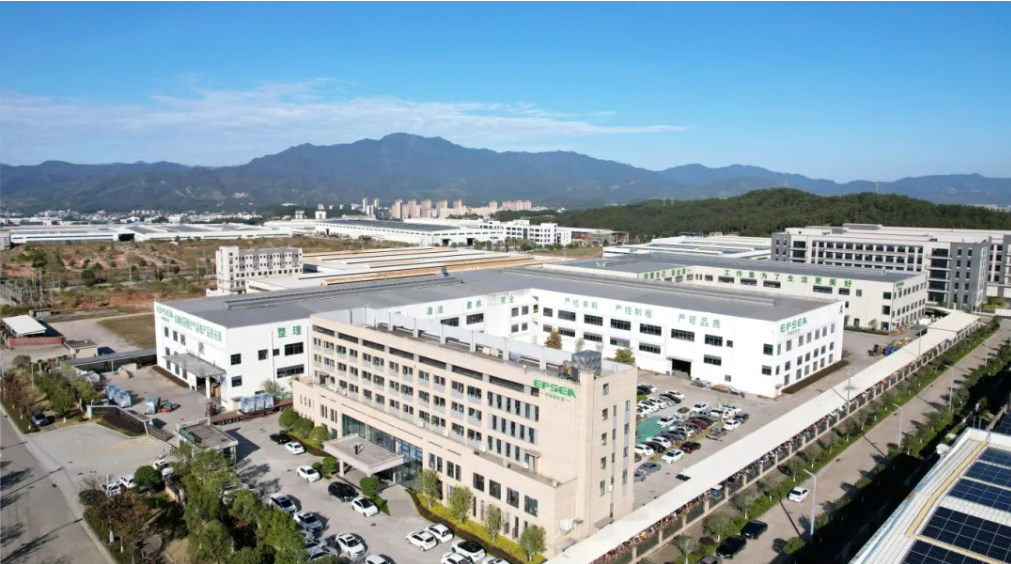
第一厂区
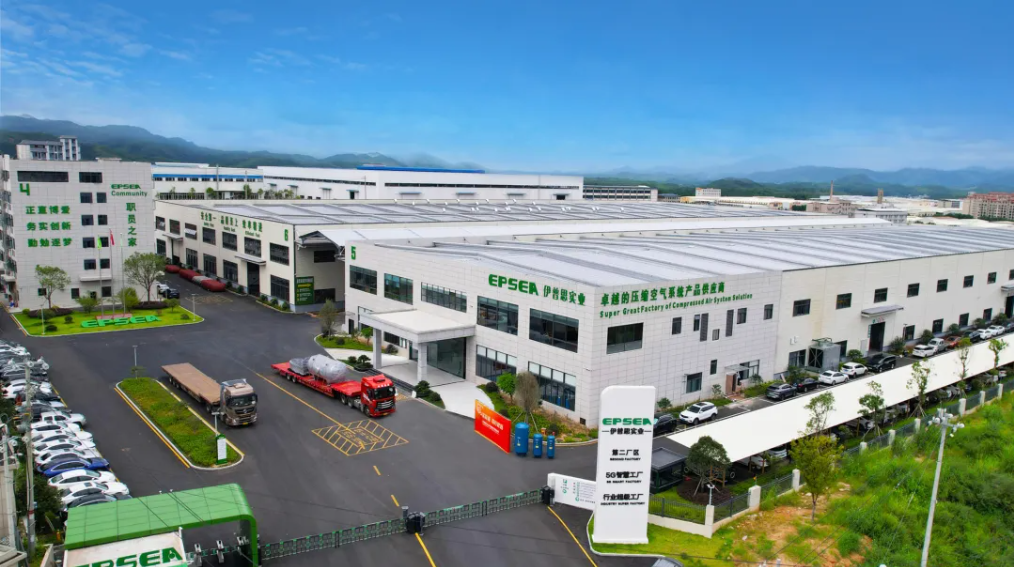
第二厂区

第三厂区
专注于压缩空气净化及过滤与分离产品
是我们做到无忧服务的承诺
致力于打造全球领先的压缩空气系统产品供应商